When An IV Goes Wrong: The Dangers of Vesicant Extravasation
A potential and highly morbid complication of drug therapy is soft tissue damage caused by leakage of the drug solution out of the vein. A variety of complications are possible. Facilities often have policies regarding vesicant administration via the peripheral iv. Some institutions require that vesicants such as sodium bicarb drips are administered via a central venous access device only. The most severe type of iv infiltration usually occurs when vesicants infiltrate the tissues surrounding the iv site. Once an infiltrate is discovered, frequent assessments should be completed. Documentation regarding sensation, motor function and circulation of affected extremity should be present for every assessment. Early diagnosis of an infiltrated iv helps to minimize tissue, nerve or muscle damage. Most burns get worse before they get better and can affect other vital systems so early and aggressive treatment is key.
Vesicant: a highly caustic agent that causes tissue destruction
Extravasation: unintentional leakage of fluid out of a blood vessel into surrounding tissue.
Vesicant extravasation: leakage of a drug that causes pain, severe tissue damage, necrosis or tissue sloughing. This can lead to delayed healing, infection disfigurement, loss of function and even amputation.
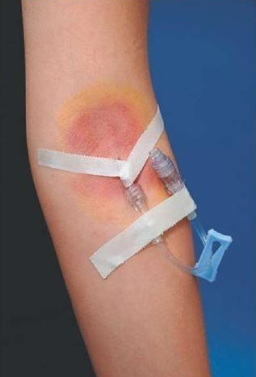
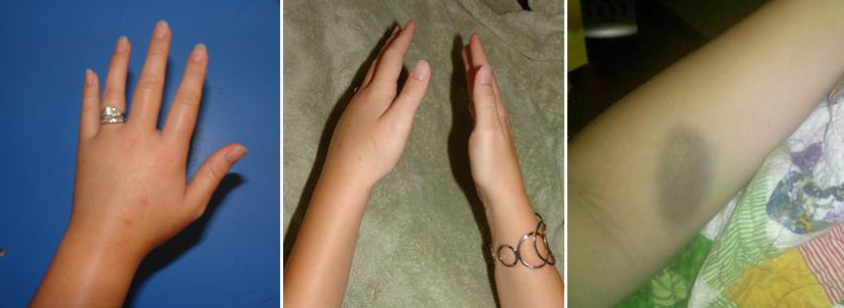
Typical pictures of iv infiltrations
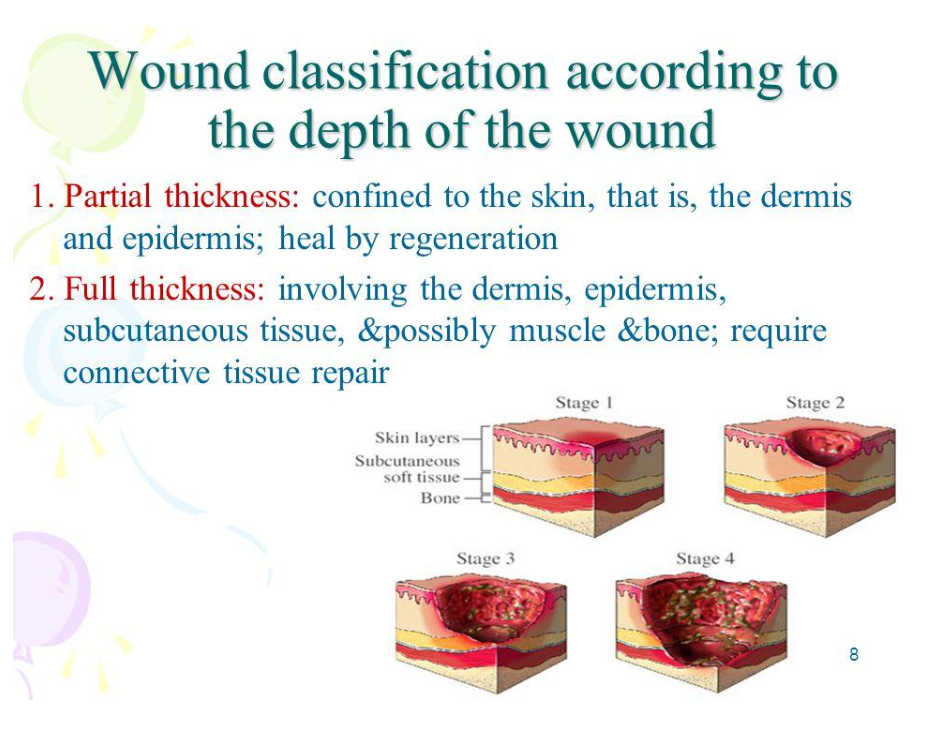
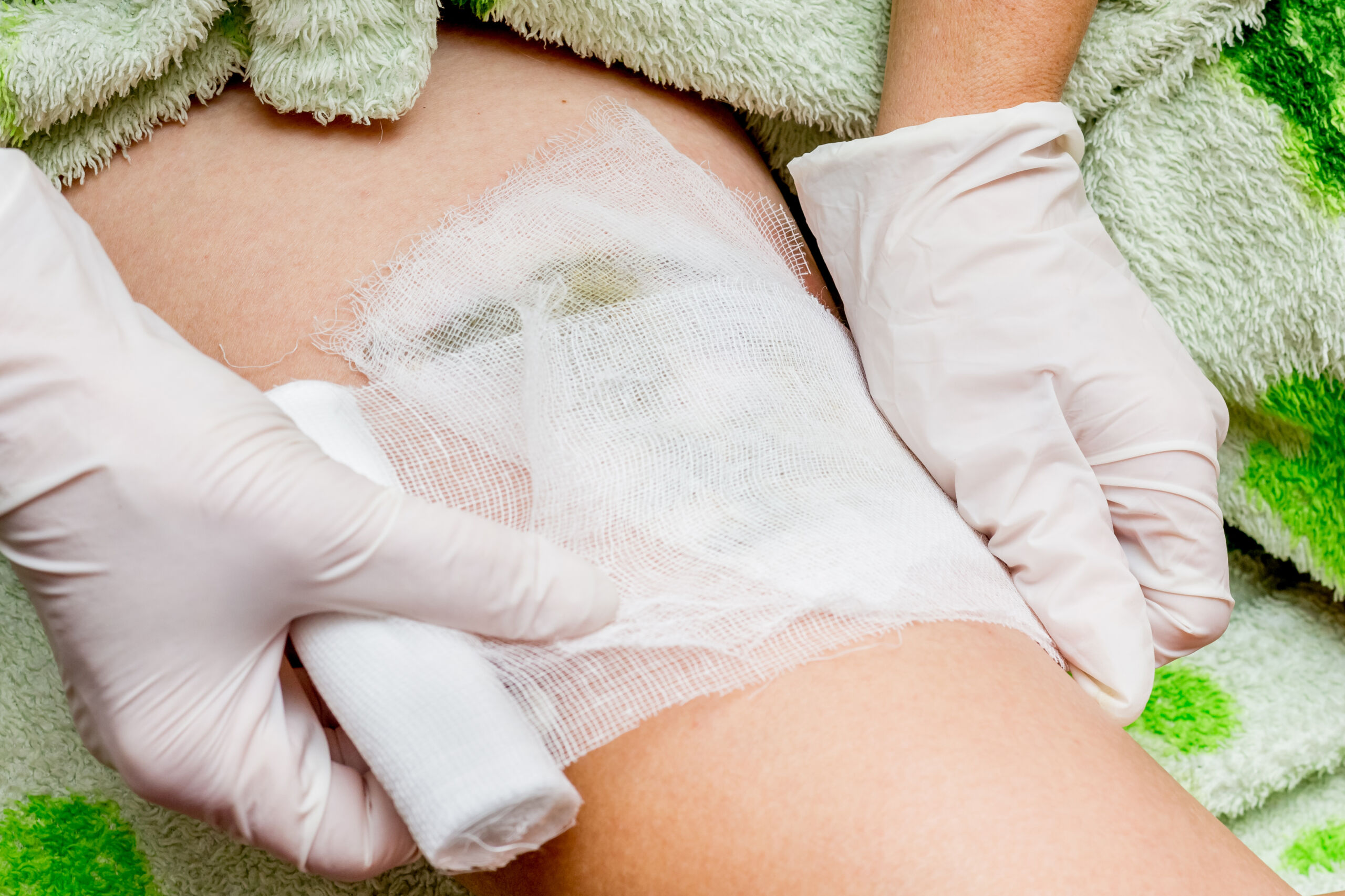
Early on in wound documentation the wound appears to look like a second degree or partial thickness burn that progressed to a full thickness wound that required a split thickness skin graft with removal of eschar.
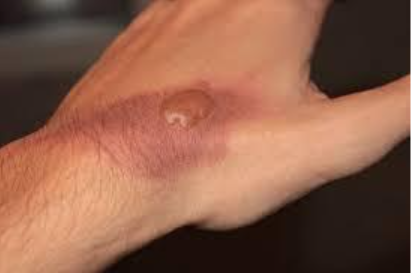
Second degree/partial thickness burn
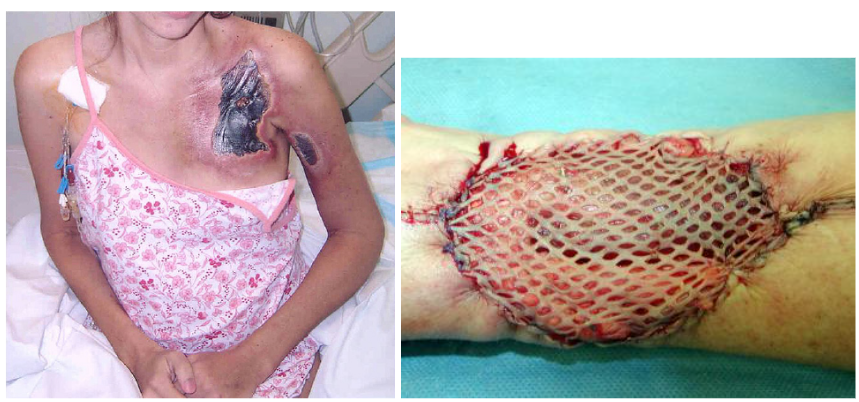
Eschar Split thickness skin graft